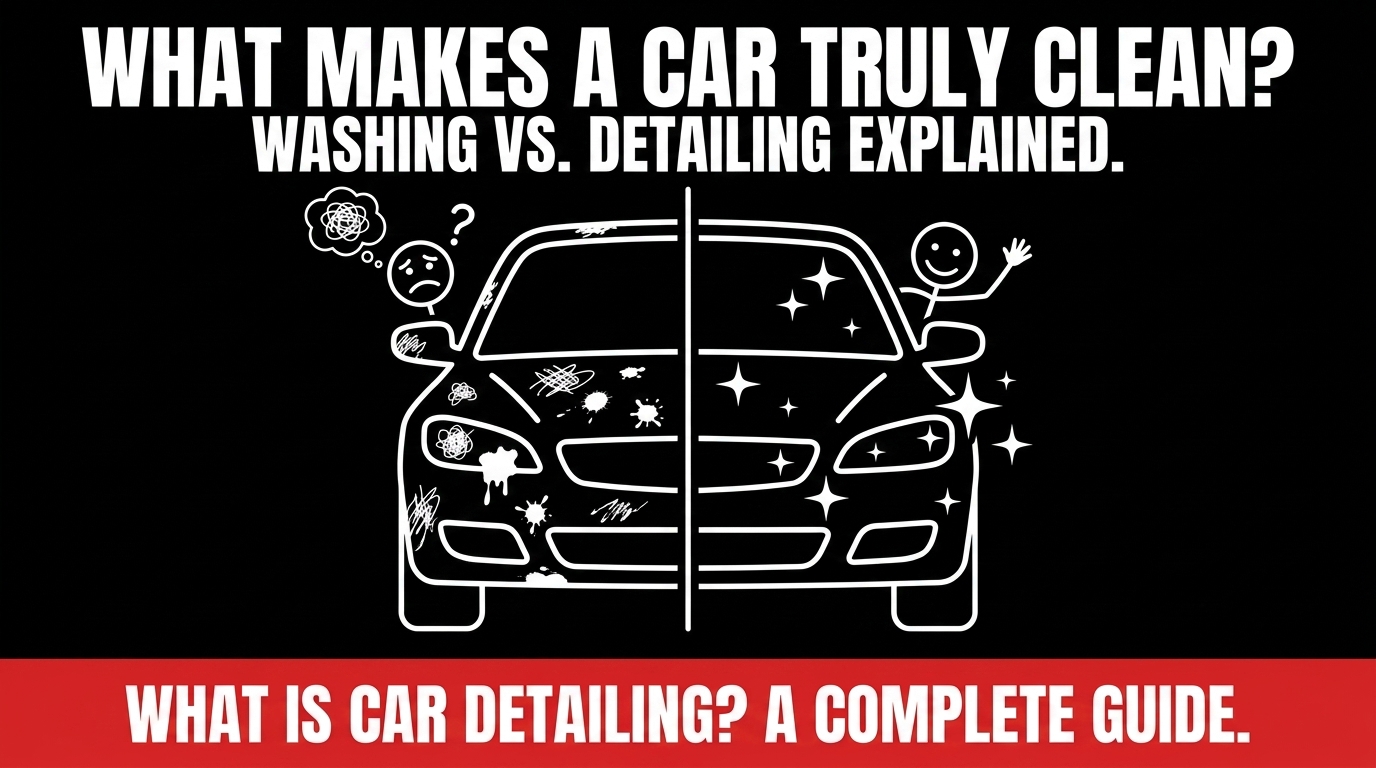
If you have ever driven out of a car wash and wondered why your seats still smell faintly of last week’s coffee spill, you already understand the gap that detailing fills. A lot of people ask what is car detailing when what they really mean is: why does my car still look tired after I paid someone to clean it? The short answer is that a wash and a detail are not the same job, and mixing them up is the easiest way to end up disappointed.
This guide breaks down what is car detailing in plain terms, what it actually includes, what the different service types cover, and how to decide whether to do it yourself or book a professional.
What Is Car Detailing?
Car detailing is a thorough, hands-on process of cleaning, restoring, and protecting a vehicle’s surfaces, both inside and out. It goes well past rinsing off dust and grime. A detailer works section by section, using specific products and tools for paint, glass, plastic, leather, and fabric, because each material needs different treatment to come clean without getting damaged.
So when someone asks what is car detailing in one sentence, this is it: it is the difference between removing dirt and actually restoring the condition of the surface underneath it.
Car Detailing Vs Car Wash: What’s The Difference
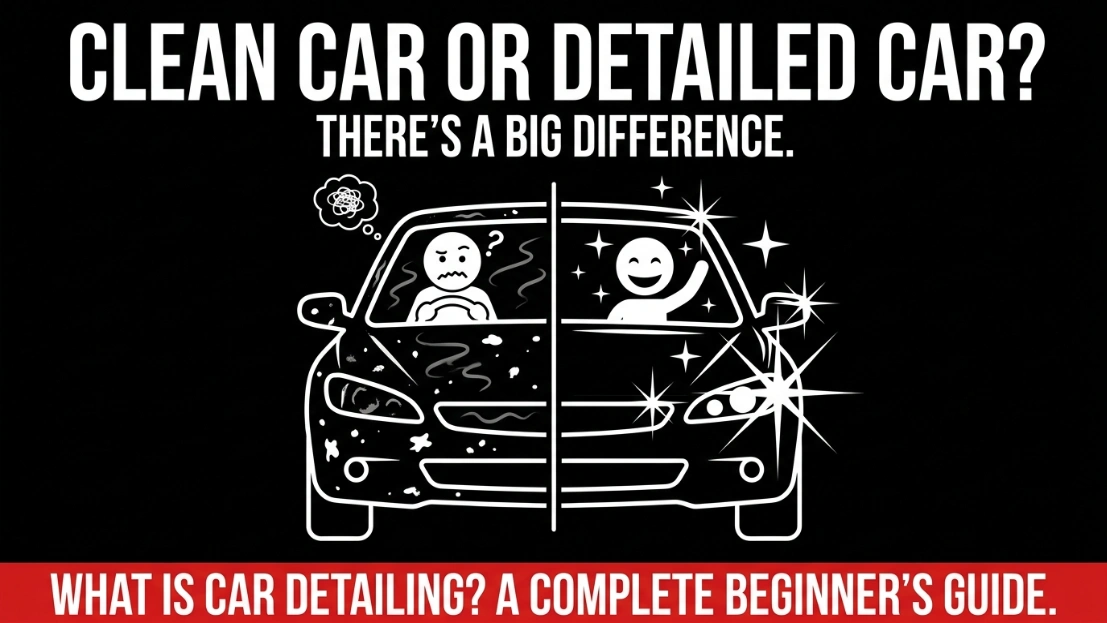
This is where most of the confusion starts, so it helps to lay it out side by side.
| Car wash | Car detailing |
|---|---|
| Quick exterior rinse | Deep interior and exterior cleaning |
| Machine or basic hand wash | Hand cleaning with specialized tools |
| 10 to 20 minutes | Several hours, sometimes a full day |
| Cleans the surface | Corrects and protects the surface |
| Results fade within days | Results hold up for weeks or months |
A car wash keeps your vehicle presentable between details. It is not built to fix dull paint, stained upholstery, or the layer of grime that builds up in door jambs and air vents. That is the job detailing is meant for.
What’s Included In A Car Detail
Once you understand what is car detailing at a high level, it helps to know what actually happens during a session. Most professional details split into two halves: exterior and interior.
Exterior Detailing
Exterior work usually follows this order:
- A full hand wash using the two bucket method, which keeps grit from scratching the paint back into itself.
- Decontamination with a clay bar to lift bonded dirt, tar, and iron particles that washing alone cannot remove.
- Polishing to smooth out light scratches and swirl marks and bring back gloss.
- A protective layer, either wax, a paint sealant, or a ceramic coating, applied to guard the finish.
Wheels, tires, glass, and trim get their own separate cleaning steps, since each surface reacts differently to chemicals.
Interior Detailing
Interior work focuses on everything you touch and breathe inside the cabin:
Seats and carpets get vacuumed and, if needed, steam cleaned to lift stains and odors. Leather surfaces are cleaned and conditioned so they do not crack. Dashboards, door panels, and consoles are wiped down with material-specific cleaners. Glass gets cleaned from the inside to avoid the streaking you get from window cleaner sprayed near vents. Finally, the cabin is deodorized to remove lingering smells rather than just masking them.
Types Of Car Detailing Services
Once the basics of what is car detailing make sense, the next useful thing to know is that not every detail is the same size job. Knowing the categories helps you ask for the right one.
Standard exterior detailing covers the hand wash, clay, polish, and protection steps above. Standard interior detailing covers vacuuming, wipe downs, and glass. A full detail combines both. Restorative or corrective detailing goes further, targeting oxidized paint, deep scratches, or years of neglect, and can take a couple of days. Mobile detailing is simply any of the above performed at your home or office instead of a shop. There is also show car detailing, which is the top tier reserved for cars that rarely see daily traffic and get treated more like display pieces than transportation.
How Much Does Car Detailing Cost
If you are still weighing what is car detailing worth in real terms, price is where it gets concrete. It depends on a few things: the size of the vehicle, how dirty or damaged it currently is, and which add ons you choose. A basic wash and interior tidy up costs less than a full detail with paint correction and ceramic coating, which can run into a multi hour job with premium products. SUVs and larger vehicles typically cost more than hatchbacks simply because there is more surface area to cover. If you are getting quotes, ask exactly what is included in the price rather than assuming “detailing” means the same thing at every shop, since the term gets used loosely.
How Often Should You Get Your Car Detailed
Most daily drivers do well with a full detail every three to six months, with a quick interior refresh in between if you carry kids, pets, or eat in the car often. Vehicles exposed to dust, coastal air, or heavy sun exposure may need more frequent attention, since these conditions wear down paint protection faster. If you are prepping a car for resale, a detail right before listing photos or a buyer viewing tends to pay for itself.
DIY Detailing Vs Hiring A Professional
Part of answering what is car detailing for yourself is figuring out how much of it you actually want to do. You can absolutely wash and vacuum your own car, and plenty of people enjoy doing it on a weekend. Basic maintenance, hand washing, interior wipe downs, glass cleaning, is well within reach for most owners with the right supplies.
Where it gets riskier is paint correction and coating work. A machine polisher in inexperienced hands can burn through clear coat, and a poorly applied ceramic coating can trap dirt underneath it rather than protect the paint. If your car needs anything beyond a basic wash and wax, or if the paint has visible damage, it is usually cheaper in the long run to pay a professional once than to fix a DIY mistake later.
Why Car Detailing Matters
Every explanation of what is car detailing eventually comes back to this: beyond looking good, detailing protects the things that cost money to replace. Clean, sealed paint resists oxidation and holds its value better at resale. A cared for interior keeps allergens, bacteria, and odors from building up in fabric and carpet, which matters if anyone in the car has allergies. And there is a simpler reason too: a genuinely clean car is just more pleasant to sit in every day.
The Bottom Line
At this point, what is car detailing should be a much easier question to answer: it is the process of cleaning, correcting, and protecting a vehicle’s surfaces by hand, rather than just rinsing off the top layer of dirt. Whether you handle the basics yourself or hand the paint correction to a professional, understanding what each step actually does makes it a lot easier to know what you are paying for, and when it is actually worth it.
FAQs on Car Detailing
What does detailing mean on a car?
It means a full, hands-on cleaning and restoration of the interior and exterior, going beyond what a standard wash covers.
What are the basic steps of car detailing?
Wash, decontaminate with clay, polish, then apply a protective layer such as wax, sealant, or ceramic coating.
How long does car detailing take?
A standard full detail usually takes two to five hours. Restorative work or ceramic coating can take a full day or longer.
Does detailing remove scratches?
Light swirl marks and shallow scratches often buff out during polishing. Deep scratches that catch a fingernail usually need paint touch up or repair work instead.
What’s the real difference between a car wash and detailing?
A wash cleans the surface temporarily. Detailing corrects and protects the surface for weeks or months.