You’ve probably driven past a detailing shop and wondered what actually happens in there. It’s not just a fancy car wash. If you’ve ever asked yourself what is car detailing and why it costs so much more than a regular rinse, this guide breaks it all down. We’ll cover what car detailing is exactly, what it includes, how much it costs, and whether doing it yourself is a realistic option.
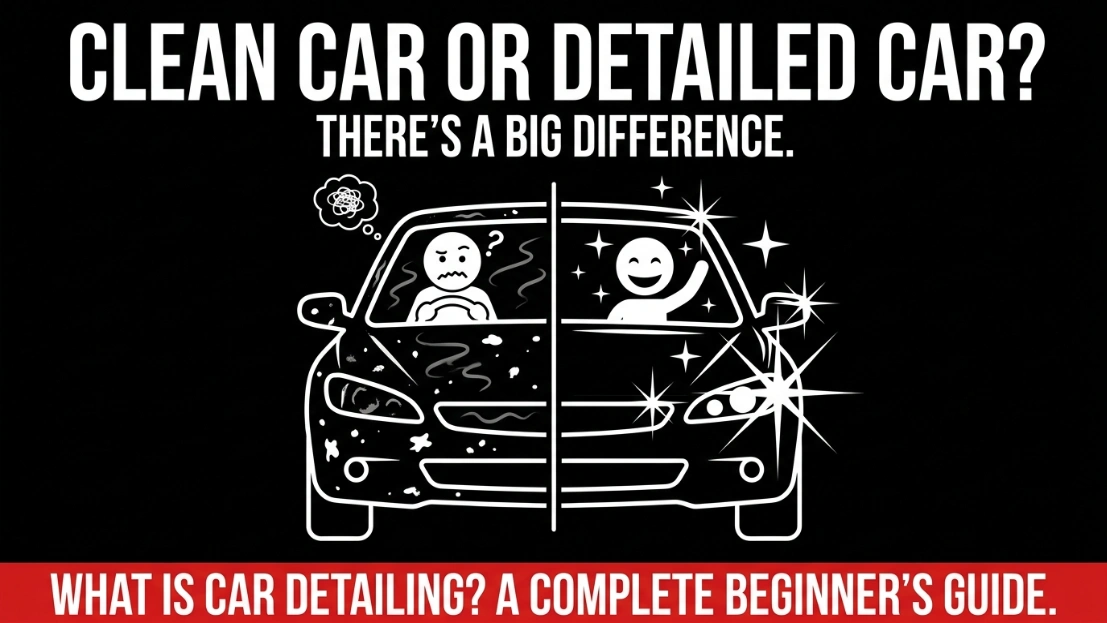
Car detailing is a thorough, hands-on cleaning and restoration process that covers every surface of your vehicle, inside and out. Paint, glass, leather, plastic, rubber, fabric and each material gets treated with products and techniques made specifically for it.
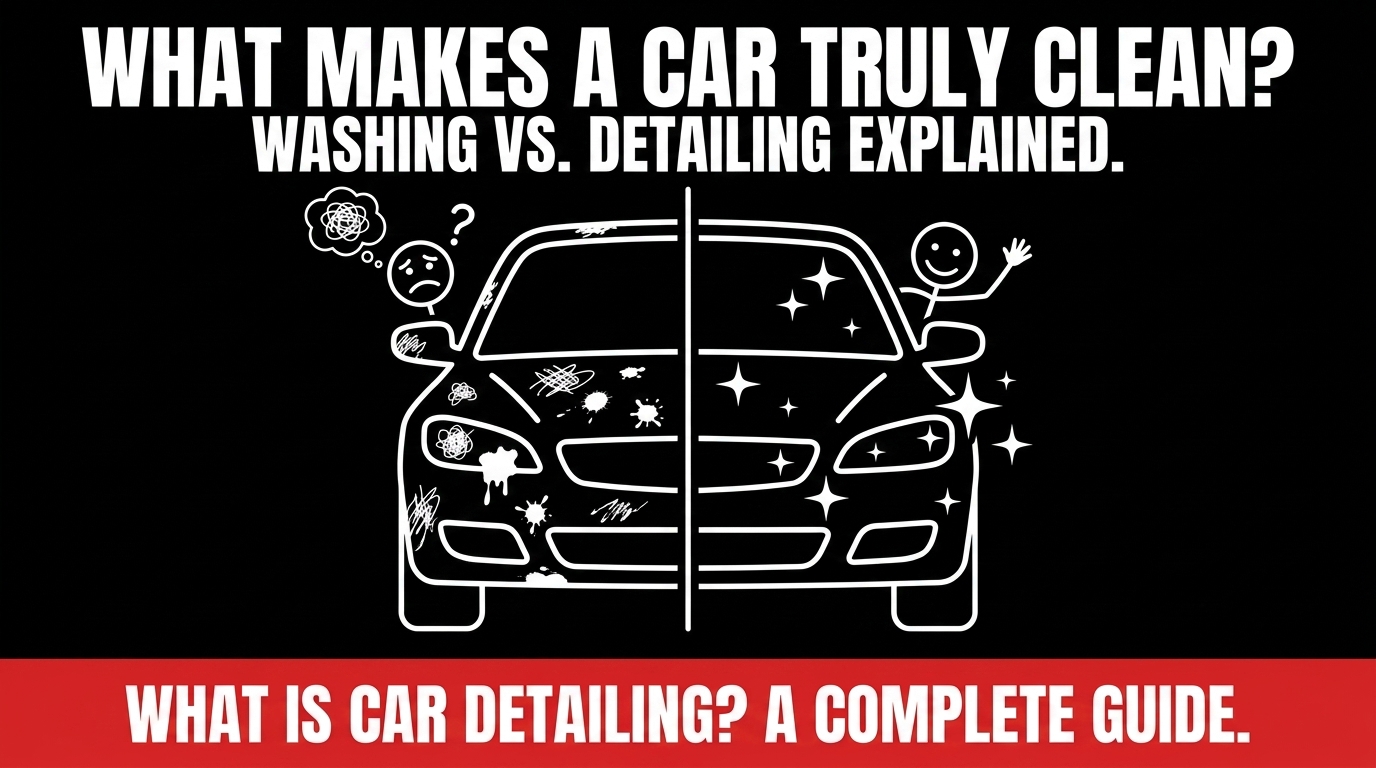
A regular car wash runs your vehicle through a machine and calls it done. Car detailing is always done by hand, and it goes several layers deeper. A professional detailer removes bonded contaminants from the paint, corrects surface scratches, deep-cleans carpets and upholstery, and then applies protective coatings to keep everything looking good longer.
The goal is not just a clean car. It’s a car that looks close to how it did when it left the factory floor, or sometimes better.
Car Detailing vs. Car Wash: What’s the Difference?
People mix these two up constantly. Here’s the honest distinction:
| Feature | Car Wash | Car Detailing |
|---|---|---|
| Method | Automated machine | Done entirely by hand |
| Focus | Surface dirt removal | Cleaning, correction, protection |
| Interior work | Rarely included | Thorough cleaning of all surfaces |
| Paint treatment | Basic rinse/dry | Clay bar, polish, wax or coating |
| Time | 5 to 15 minutes | 2 to 8+ hours |
| Cost | $10 to $30 | $80 to $300+ |
A car wash keeps your car presentable. Car detailing keeps it in good condition.
What Does Car Detailing Include?
A full detail splits into two areas: exterior and interior. Here’s what each actually involves, step by step.
Exterior Detailing: Step by Step
1. Pre-rinse and snow foam: The detailer starts with a pressure wash to knock off loose dirt, usually followed by a thick snow foam that clings to the bodywork and softens grime before anything touches the paint. Skipping this and going straight to a wash mitt on a dirty car is one of the quickest ways to scratch the clear coat.
2. Hand wash (two-bucket method): The car gets washed from top to bottom, one panel at a time, using a pH-balanced shampoo and a microfibre mitt. Two buckets are used: one for fresh soapy water, one to rinse the mitt between panels. It stops dirty water from going back on the paint.
3. Decontamination (clay bar): Even after a thorough wash, paint can still hold bonded contaminants — brake dust particles, tar, industrial fallout. These don’t come off with shampoo. A clay bar dragged across the surface pulls them out. Run your fingers over a freshly clayed panel and the difference in texture is immediate.
4. Paint correction (polishing): Optional, but common on cars with dull or scratched paint. A machine polisher with an abrasive compound removes swirl marks, light scratches, and oxidation from the clear coat. Done right, it can make a ten-year-old car look like it was just painted. Done wrong, you remove too much clear coat and create a bigger problem.
5. Protection (wax, sealant, or ceramic coating): This step locks in the results. Wax gives a warm gloss but needs reapplying every couple of months. Synthetic sealants last six to twelve months. Ceramic coatings bond chemically to the clear coat and can hold up for two to five years, though they cost considerably more to apply.
6. Wheels and tyres: Wheels get a dedicated cleaner to cut through brake dust and road grime. Tyres are scrubbed clean, then dressed to restore their appearance and slow down rubber degradation.
7. Exterior glass: All windows and mirrors get a dedicated glass cleaner — not the same product used on the bodywork.
Interior Detailing: What Gets Cleaned
The interior half of a full detail is just as involved as the exterior, sometimes more so on older or heavily used vehicles.
- Vacuuming: Seats, carpets, mats, boot, headliner, and every gap around the console. Compressed air gets into vents and seams.
- Carpet and upholstery shampoo: Stained areas are treated with a foam cleaner or steam, scrubbed, and extracted. Steam cleaning gets into the fibres better than shampoo alone on tough stains.
- Leather cleaning and conditioning: Leather needs a dedicated cleaner to lift grime from the grain, followed by a conditioner to keep the hide from drying out and cracking.
- Dashboard and trim: Plastic and vinyl surfaces are cleaned and dressed. A good interior dressing restores the look without leaving a slippery or greasy finish.
- Interior glass: The inside of the windscreen builds up an oily film from off-gassing plastics. It contributes to glare and streaking. A proper glass cleaner removes it.
- Deodorising: Most detailers finish with an odour eliminator or a light fragrance treatment.
Types of Car Detailing Services
So what is car detailing as a service category? Not all shops offer the same packages, and the terminology is not standardised across the industry. Here’s how the tiers generally break down:
Basic detail: Hand wash, wheel clean, tyre dressing, interior vacuum and wipe-down. The maintenance option for cars is already in decent shape.
Full detail: Everything above plus interior deep-clean, glass treatment, exterior clay bar, and wax or sealant. Most people book this once or twice a year.
Paint correction: A specialist service focused on removing defects from the clear coat using machine polishers. Usually done before a ceramic coating goes on, since there is no point in sealing in scratches.
Ceramic coating: A liquid polymer that cures into a hard, hydrophobic layer on the paint. More durable than wax, easier to keep clean, and noticeably more expensive to apply.
Paint protection film (PPF): A thick polyurethane film that physically shields the paint from stone chips, scratches, and light road debris. Most commonly applied to the front bumper, bonnet edges, and mirror caps.
Full restoration detail: The most involved service. Can include paint correction, PPF, ceramic coating, engine bay cleaning, and minor bodywork. Often takes several days to complete.
How Much Does Car Detailing Cost?
What is car detailing going to cost you? Prices in India vary quite a bit depending on the city, the studio, and the services included. Here is a realistic breakdown for 2026:
- Basic exterior detail (wash, polish, wax): ₹1,500 to ₹4,000
- Full interior and exterior detail: ₹3,500 to ₹8,000 for hatchbacks and sedans; ₹6,000 to ₹12,000+ for SUVs and MUVs
- Paint correction: ₹5,000 to ₹15,000, depending on the car’s condition and panel count
- Ceramic coating: ₹8,000 to ₹50,000+, depending on the brand, warranty period, and whether paint correction is included
- PPF installation: ₹15,000 to ₹2,20,000+, depending on coverage area and film brand
Metro cities like Mumbai, Delhi, Bengaluru, and Hyderabad generally charge more than Tier 2 cities, because operational costs and demand are higher. SUVs and MPVs cost more across every category due to the larger surface area involved.
One thing worth knowing about the Indian market specifically: pricing transparency is inconsistent. You will find studios advertising ceramic coating for ₹4,999 and others quoting ₹40,000 for the same service. The difference is usually the product quality and whether proper paint correction is done before the coating goes on. A cheap ceramic package that skips prep work seals the imperfections in, rather than fixing them. Always ask what brand of products is being used and get a written quote before work starts.
How Often Should You Get Your Car Detailed?
Every three to six months is the general recommendation for what is car detailing maintenance. The real answer depends on how the car gets used.
A daily driver in a coastal or dusty environment picks up contamination much faster than a car parked in a garage most of the week. If a ceramic coating has been applied, the exterior stays cleaner between washes and a full detail may only be needed once a year. As a baseline, two thorough details a year makes a noticeable difference in how the interior materials hold up over time.
Can You Detail Your Car at Home?
Yes, and plenty of people do. The process behind what is car detailing at home is the same as professional service. The difference is time, technique, and equipment.
Reasonable to DIY:
- Two-bucket hand wash
- Clay bar decontamination
- Applying wax or a spray sealant
- Interior vacuum, wipe-down, and glass cleaning
Better left to a professional:
- Machine polishing and paint correction (easy to cause real damage without experience)
- Ceramic coating application (surface prep and application technique determine how well and how long it bonds)
- PPF installation (requires precision cutting and ideally a dust-free space)
What You Need to Start
A working starter kit does not require spending much:
- Two wash buckets with grit guards
- Microfibre wash mitt
- pH-balanced car shampoo
- Clay bar kit
- Microfibre drying towel
- Wax or sealant with applicator pads
- Dedicated glass cleaner and glass cloth
- Interior brush set
- A vacuum with crevice attachments
A decent setup can be pulled together for ₹3,000 to ₹6,000. You do not need the expensive professional products to get solid results on routine maintenance.
Why Regular Detailing Is Worth It
The clean car is the obvious part. What is car detailing actually does to protect the vehicle long-term is the more useful thing to understand.
Paint takes constant environmental abuse: UV light fades the colour, road salt accelerates corrosion, bird droppings and tree sap etch into the clear coat if left. Wax and sealants create a barrier that slows all of that down. Without any protection, the paint oxidises, and the clear coat starts to fail, and a respray costs far more than a year of detailing.
Leather cracks when it dries out. Carpet fibres wear down faster when grit is ground into them over months. Regular cleaning and conditioning add years to how long these materials look and function properly.
Resale value is a practical consideration too. A car with clean, well-maintained paintwork and a fresh interior sells faster and closer to the asking price. Buyers and appraisers notice the difference the moment they get close.
There is a diagnostic benefit as well. A thorough detail is when rust bubbles, oil leaks, cracked seals, or early paint chips often get spotted. Catching these things early costs considerably less than finding them later.
Conclusion
What is car detailing in plain terms? It is a proper cleaning that treats every surface correctly, protects the materials from breaking down, and keeps the car in genuinely good condition rather than just superficially clean. What is car detailing compared to a drive-through wash? About four hours of skilled manual work versus four minutes of automated rollers. The results reflect that difference clearly.
If you have never had a full detail done, book one and see what your car looks like once the surface grime is properly dealt with. Most people are surprised by how much was hiding under it. If you want to maintain it between professional visits, start with a solid hand wash and a basic sealant. The car holds its value better, the interior lasts longer, and it is a noticeably better thing to spend time in.
Also Read: What Is NVH in Cars? Noise, Vibration & Harshness Explained Simply
FAQs on What Is Car Detailing
How long does car detailing take?
A basic detail runs about 1 to 2 hours. A full interior and exterior detail takes 4 to 6 hours. One way to understand what is car detailing versus a car wash is simply the time: forty-five seconds through a machine versus half a day of hands-on work. Paint correction or a full restoration can stretch across multiple days.
Is car detailing worth the money?
For most owners, yes. Anyone who wonders what car detailing is worth in practical terms should look at the alternative costs: reupholstering worn seats, repainting neglected bodywork, or selling a car with faded paint for much less than it should fetch. Two details a year cost far less than any of those.
Does car detailing remove scratches?
This is one of the most common questions people have when they first look into what is car detailing. Light surface scratches and swirl marks in the clear coat can be polished out. Scratches that go through to the primer or bare metal need paint touch-up or a respray, not detailing.
What is ceramic coating?
Ceramic coating is a service that often comes up when people research what car detailing is at the premium end. It is a liquid polymer that bonds chemically to the clear coat when it cures, creating a hard, water-repelling surface that lasts two to five years with proper maintenance.
Can car detailing damage paint?
Done correctly, no. Done with the wrong technique — a dirty mitt, too much pressure with a machine polisher, or abrasive products on a thin clear coat — yes. This is why paint correction is best handled by someone with real experience doing it.
What should I do before dropping my car off for a detail?
Remove your personal items and any rubbish from the interior. That is it. There is no need to pre-clean; that is the whole point of the service.
How often should I wax my car?
Carnauba wax needs reapplying every 6 to 8 weeks. Synthetic sealants last 6 to 12 months. A ceramic coating holds for 2 to 5 years depending on the product and how well it is maintained.