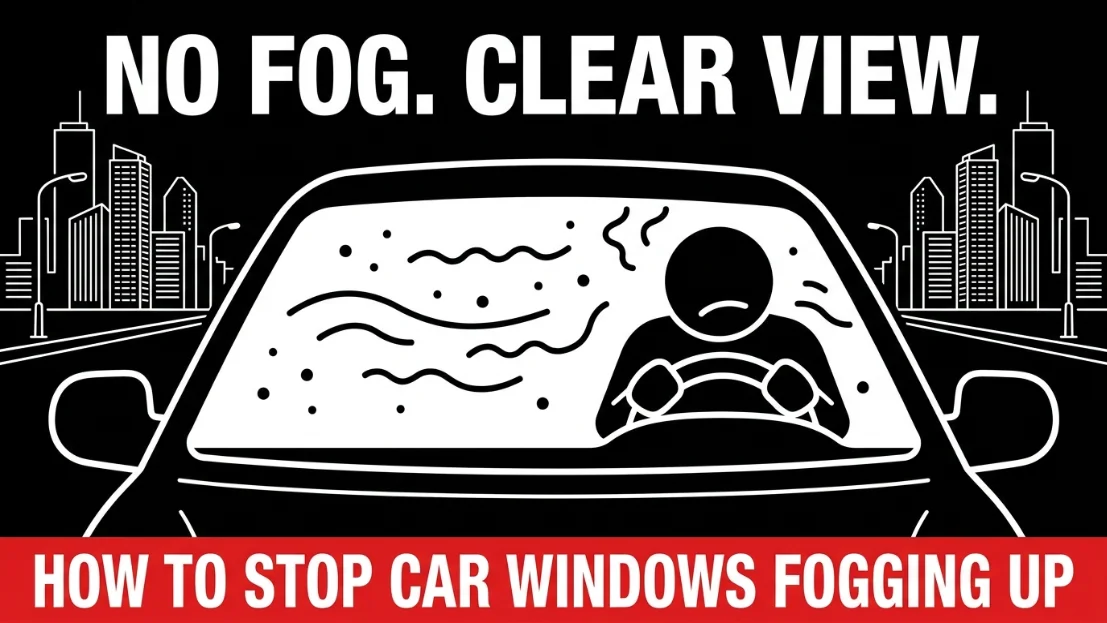
You get into the car, turn the key, and the entire windscreen is a wall of grey. You can’t see the bonnet, let alone the road. Five minutes of smearing with your sleeve later, you’re late and annoyed.
Fogged windows are irritating. They’re also genuinely dangerous. Reduced visibility in car parks and residential streets is behind a lot of low-speed accidents, precisely because people figure “it’s just around the corner” and set off before the glass has cleared.
The frustrating part is that most people clear fog the wrong way, which either takes forever or makes things worse. This guide covers why it happens, how to clear it fast, and what to do to stop it from coming back.
Why does your car fog up?
Warm, moist air inside the car hits cold glass, and the moisture condenses. It’s the same thing that happens when you take a cold glass outside on a humid day. The glass sweats.
What changes is where the fogging appears, and that depends on the season.
Inside fog vs outside fog
In winter, the air outside is cold and dry. Inside your car, you’re breathing, the heater is on, and wet jackets are drying on the back seat. All that moisture condenses on the windows because it has nowhere else to go.
In summer, the situation reverses. Your A/C has chilled the inside of the car. Hot, humid outside air touches the cold glass, and the outside surface fogs up instead.
This matters because the fix is different. Hot air directed at the glass clears the inside fog. For outside fog, wipers work, and so does turning the A/C off briefly so the glass warms up and matches the outside temperature.
Why does humid and rainy weather make it worse
Rain doesn’t stay outside. You bring it in on your jacket, your shoes, and a soaking umbrella. Every passenger adds more humidity through breathing. Wet floor mats keep evaporating quietly for hours. On a rainy day, your car’s interior becomes a small greenhouse, and the windows are always the first thing to show it.
How to Clear a Foggy Windscreen Fast
A lot of drivers do this wrong. They blast hot air immediately, the fog gets worse for thirty seconds, and they give up. Here’s what actually works, in order.
Hit the demist button first: It’s usually a rectangle with wavy lines on the dash. In most modern cars, pressing it automatically activates the A/C and directs the fan at the windscreen. If your car has a heated front windscreen, turn that on too. It clears faster than the fan alone.
Switch on the A/C: This is where people hesitate. Who wants air conditioning in winter? But the A/C doesn’t just cool. It removes moisture from the air. Running A/C with the heat turned up gives you warm, dry air pointed at the glass. That’s what you need.
Turn off air recirculation: There’s usually a button with a car outline and a circular arrow inside it. If it’s on, switch it off. Recirculation keeps the same cabin air cycling. That air is already humid from your breathing. Turning it off pulls in drier air from outside.
Crack a window: Even two centimetres helps. It lets humid air escape and speeds up the whole process noticeably. Cold for half a minute, yes. But your windscreen clears twice as fast.
Bring up the temperature slowly: Starting the heater at maximum floods the cabin with warm, moisture-laden air before the A/C has dried anything out. Turn it up gradually. It sounds counterintuitive, but a slower temperature increase actually clears the glass faster.
How to Stop your Car Fogging Up (things that last)
Clearing fog every morning is the symptom. Here’s what causes it and what to do about it properly.
Clean the inside of your windows
Grease and dirt on the interior glass give moisture something to cling to. A clean window fogs up less, and when it does fog, it clears in half the time. Wipe the inside of your windows with a microfibre cloth regularly. Most people do the outside but forget the inside is just as grimy.
Get wet things out of the car
A soaking umbrella on the back seat. Wet shoes in the footwell. These things evaporate moisture into the cabin air for hours after you’ve parked. Leave them in a bag in the boot, or better yet, don’t leave them in the car overnight. This one change makes a bigger difference than most people realise.
Put a moisture absorber in the cabin
Silica gel packs (the same little packets that come in shoe boxes) absorb moisture from the air. You can buy bags made for cars, or just reuse the packets you already have. One on the dashboard, one under a seat. They need drying out in an oven every few weeks to keep working, but they’re inexpensive, and they genuinely help.
DampRid calcium chloride pouches work similarly and last a bit longer before needing replacement.
Apply an anti-fog product
Rain-X Anti-Fog is the one that comes up most among mechanics and detailers. Apply a thin coat to the inside of the windscreen and wipe it clean. It leaves a barely visible layer that stops moisture beading on the glass. Reapply every few weeks.
No anti-fog spray to hand? Shaving cream works as a reasonable substitute. Rub a thin layer on the inside of the glass, then wipe it completely off with a dry cloth. The residue does the same job. It won’t last as long, but it’s immediate and costs nothing.
Check your door and window seals
This one’s easy to overlook. Run your hand along the door rubbers and window seals. If they’re cracked, brittle, or pulling away, water gets into the door cavities and collects in the carpet. It then evaporates slowly over days, keeping the humidity in the cabin permanently elevated.
Check the boot carpet too. Lift it and feel underneath. Damp carpet under there usually means a boot seal leak or a blocked drain. A wet boot is a common source of persistent fogging that no amount of demisting fixes.
Park out of the cold when possible
A garage prevents the overnight temperature drop that leads to morning condensation. No garage? A car cover helps for the same reason. A covered car stays a few degrees warmer overnight, and warmer glass is less prone to fogging when you start up.
When Fogging Keeps Coming Back
If you’ve done everything above and the windows still mist over constantly, or clear and then immediately fog again, there’s likely something wrong with the car itself.
A blocked cabin filter is the most common cause people miss. It lives behind the glovebox and should be replaced roughly every 15,000 km. A clogged filter chokes the airflow through the ventilation system, so the demist function barely works even when you have it switched on. If you can’t remember the last time it was changed, start there.
A failing A/C system is another. If the refrigerant is low, the system runs but doesn’t dehumidify. You can feel it: the air blowing through the vents isn’t noticeably drier. It needs a regas.
The most serious one is a heater core leak. The heater core is a small heat exchanger behind the dashboard that warms the cabin air. If it cracks or starts seeping, coolant vapour gets into the air. You’ll notice it as a faint sweet smell when the heater runs, and a greasy film on the inside of the windscreen that won’t wipe off cleanly. Don’t leave this one. Coolant vapour isn’t something you want to breathe, and the glass film is a visibility hazard on top of that.
Is it illegal to drive with a fogged windscreen?
Yes, in most countries. In the UK, it falls under the Road Vehicles (Construction and Use) Regulations, which require a clear view through the windscreen before driving. Most other jurisdictions have equivalent rules.
In practice, this means a police stop, a fine, and potentially points on your licence if an officer considers your visibility compromised. More importantly, setting off with a windscreen you can barely see through is how minor accidents happen.
Wait for the two minutes. It’s always worth it.
FAQs on How to Stop Your Car From Fogging Up
Why does my car fog up the moment I get in?
Your body heat and breath warm the cabin air quickly. When that warm, humid air hits cold glass, it condenses immediately. It’s worst in the first two to three minutes, before the defroster has had time to warm the glass.
Hot air or cold air: which clears fog faster?
Neither, on its own. The important thing is dry air. Hot air can hold more moisture, which helps. Cold air pulled in from outside is already dry, which also helps. What matters most is having the A/C on (it dehumidifies), recirculation off (so dry outside air comes in), and the fan aimed at the glass. Temperature is secondary.
Does opening a window actually help?
It does. Inside air in winter is far more humid than outside air. Cracking a window lets humid air escape and brings drier air in. It makes a noticeable difference, especially with a full car.
My windows fog up even with the A/C on. Why?
Check whether air recirculation is on. That’s the most common reason. If recirculation is already off, the A/C itself may not be working properly. Low refrigerant means the system blows air without dehumidifying it.
How do I stop the car from fogging up overnight?
Remove all damp items from the cabin. Put silica gel packs on the dashboard. If the car is parked somewhere safe and covered, leaving the windows cracked a centimetre overnight helps a lot. A car cover or parking in a garage makes a real difference too.
Does shaving cream on the windscreen actually work?
Yes. The thin film it leaves behind creates a surface that resists moisture beading up. It’s essentially a DIY version of anti-fog spray. Apply a thin layer to the inside of the glass, wipe it completely off, and it’ll hold for about a week of daily use.
What is that greasy film on my windscreen that won’t wipe off?
If it keeps coming back and there’s a faint sweet smell from the heater, it’s likely coolant from a heater core leak. Get it checked by a mechanic. This isn’t one to ignore.
My windscreen fogs on the outside, not the inside. What do I do?
This happens in summer or humid weather when the A/C has chilled the glass and outside air is warm and moist. Use the wipers. If it keeps happening, turn the A/C temperature up slightly so the glass doesn’t get as cold.